
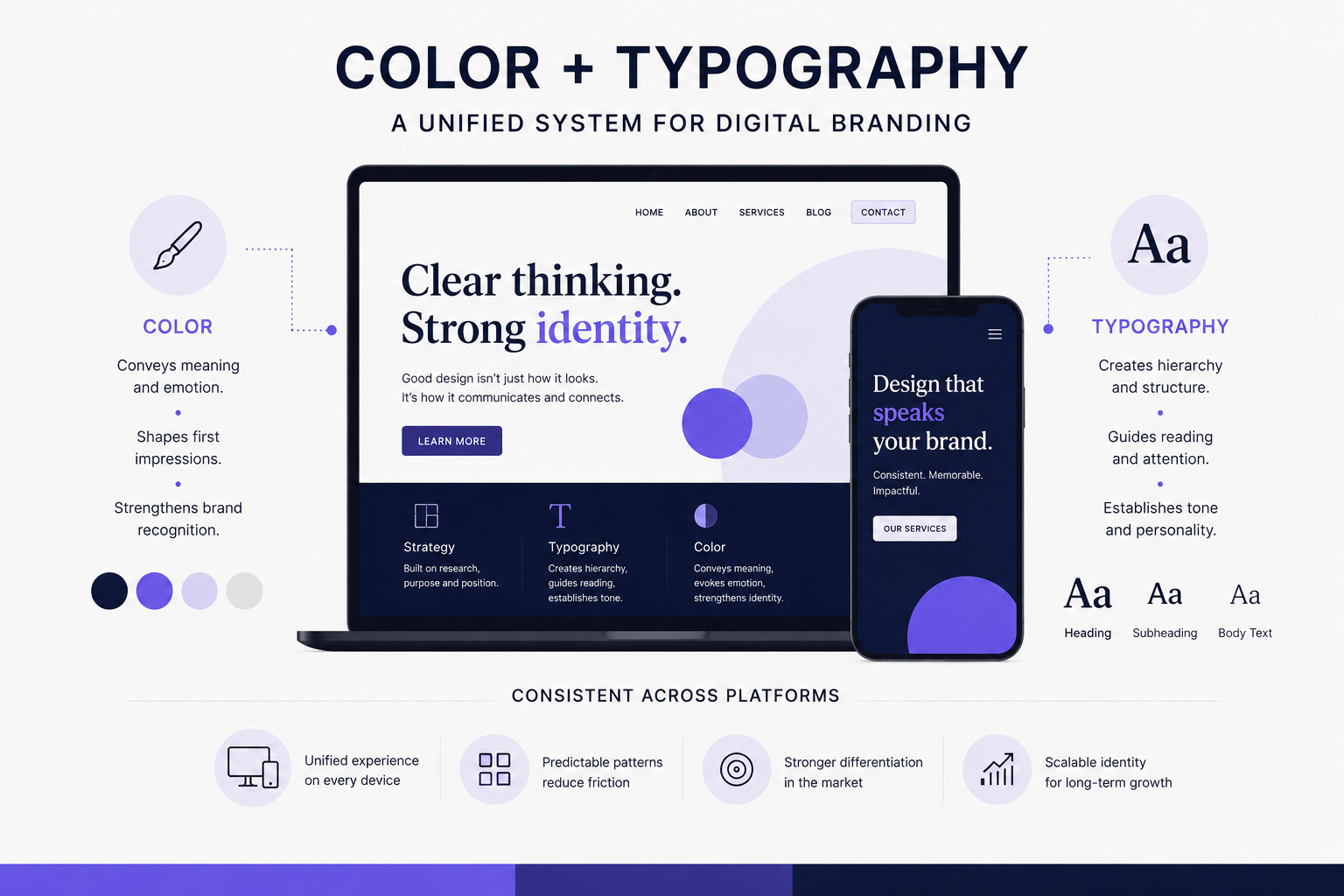
A strong brand is rarely defined by a single element. Instead, it relies on a set of recognisable features that work together to create a lasting impression. These include the name, logo, and distinct visual cues that allow audiences to immediately identify a company. A widely known example is Chanel, where minimalism, monochrome tones, and refined typography form a consistent and unmistakable identity. This recognisability is not accidental—it is the result of deliberate alignment between visual elements and brand positioning.
The visual dimension of branding typically consists of several interconnected components: color palettes, typography, shapes, logo systems, and the composition of elements across screens. These are not simply aesthetic decisions but structural ones. The way elements are arranged on a website or within an application interface directly affects how users interpret the brand. Balanced layouts, controlled spacing, and consistent visual rhythm contribute to clarity, while inconsistencies can weaken perception and trust.
From a strategic perspective, a well-defined brand identity is essential for scalability and long-term recognition. It supports marketing efforts by ensuring that communication remains coherent across different channels and formats. In this context, https://looksgreat.studio/services/branding-identity/ illustrates how structured approaches to visual systems can extend beyond isolated design tasks. Key advantages of a scalable branding system include:
- Consistent recognition across platforms and devices
- Reduced friction in user experience through predictable patterns
- Stronger differentiation within competitive markets
Color and typography as systems of meaning
Color and typography are often the first elements users notice when interacting with a digital product. They carry immediate associations that vary depending on industry context. For example, muted and restrained palettes are typically associated with healthcare or legal services, while vibrant tones may suit entertainment or creative industries. Certain combinations can be inappropriate within specific contexts—bright, playful colors would conflict with the expectations of a funeral service, just as overly rigid typography might feel out of place in a lifestyle-focused brand. These associations shape expectations before any content is read.
Brand perception, however, is not formed by individual elements in isolation. It emerges from the interaction between color and typography as a unified system of visual meaning. Together, they encode signals about quality, tone, and positioning. A refined typeface combined with a restrained palette may communicate exclusivity, while contrasting colors paired with expressive fonts can suggest energy and accessibility. This system influences not only how a brand is seen but also how users make decisions, guiding attention and shaping interpretation at every step.
Consistency plays a critical role in maintaining this system across digital environments. A branding framework must adapt to different contexts—desktop websites, mobile interfaces, and other digital touchpoints—without losing coherence. The goal is not exact replication but controlled variation, where core principles remain stable even as layouts and formats change. This ensures that users experience the same underlying identity regardless of where or how they interact with the brand.
Typography, in particular, should be understood as a behavioural structure rather than a decorative layer. It defines hierarchy, guides reading patterns, and establishes tone. Headings, body text, and microcopy all contribute to how information is processed, influencing both usability and perception. When treated strategically, typography becomes a functional system that shapes the rhythm of interaction and reinforces the brand voice visually, rather than simply adding stylistic value.
Conclusion
The integration of color and typography within digital environments has a direct impact on how brands are perceived and remembered. These elements operate as interconnected components of a broader system, influencing clarity, tone, and emotional response. When aligned with structure and context, they create a cohesive visual language that extends across platforms and interactions. This approach strengthens identity not through isolated design choices, but through a consistent and adaptable framework that supports recognition and reinforces brand perception over time, particularly within the evolving landscape of brand design services and modern brand identity development.