
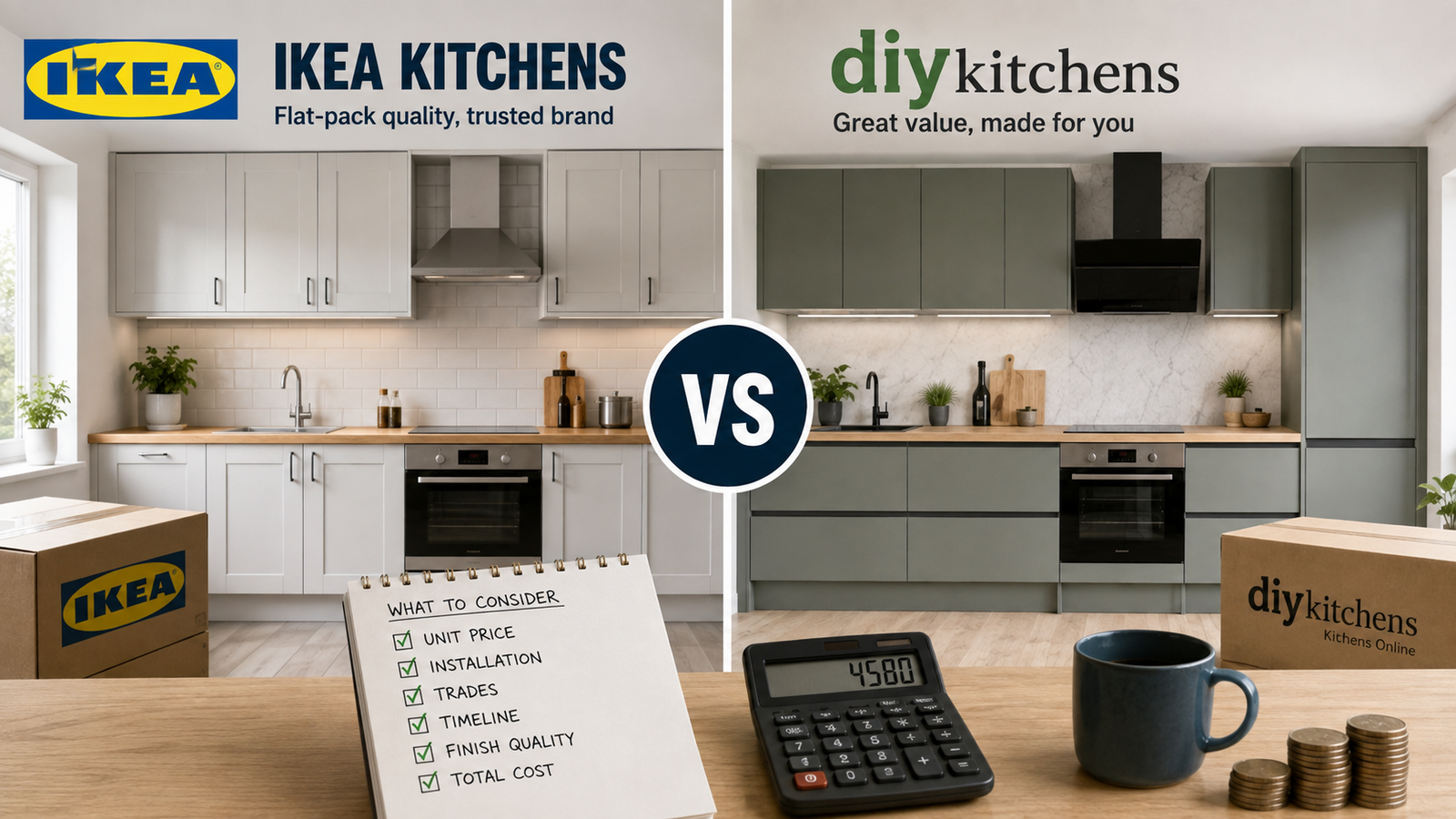
Flat-pack kitchens have become the default choice for a huge number of London renovations, and the two names that come up most often are IKEA and DIY Kitchens. Both promise a well-made carcass at a price that beats a bespoke showroom quote by a wide margin. But the sticker price on the units is only one part of the sum, and homeowners who compare the two purely on that number often end up surprised by what the project actually costs once fitting, plumbing and electrics are added in. Here’s a practical look at where the two options genuinely differ.
The Unit Price Is Rarely the Full Budget
IKEA’s METOD system is designed to be flexible and affordable, but the brand is upfront that installation is a separate matter entirely. DIY Kitchens works on the same principle: you’re buying carcasses, doors and worktops, not a finished kitchen. In both cases, the number on the order confirmation is the starting point, not the total. Anyone budgeting for a flat-pack kitchen needs to add fitting, appliance connections, plumbing and any wall or floor preparation on top before the comparison means anything. It’s a common mistake to compare quotes side by side without checking whether they cover the same scope, which is how two “similar” kitchens can end up thousands of pounds apart once the invoices actually land.
IKEA’s Own Installation Route Isn’t Always the Fastest
IKEA does offer its own installation service, but it’s subcontracted out to a network of independent fitters rather than run directly by IKEA. Lead times through that route typically run four to eight weeks from the point of purchase, and the fitter assigned isn’t chosen by the customer — availability depends on IKEA’s own booking system rather than the homeowner’s schedule. If snagging is needed afterwards, coordination runs back through IKEA’s customer service chain, which can add further delay. Homeowners who want more control over timing and who handles any follow-up work often look instead at independent teams such as the IKEA kitchen installers who work directly with the client from delivery day through to snagging, without a call centre in between.
DIY Kitchens Has No Installation Network At All
This is the point that catches people out. DIY Kitchens is an online-only brand — there’s no showroom to visit and no installation arm, which is part of how the company keeps its prices competitive. That means the entire responsibility for finding a competent fitter sits with the buyer from day one. The carcasses themselves are solid, but they still need to go in in the right sequence: cabinets levelled before worktops are measured, plumbing positioned before units are fixed, and walls prepared in advance where needed. A general handyman often misses these steps, which is why DIY Kitchens units get refitted more frequently than they should.
Timelines Look Similar on Paper
Once a fitting team is in place, the two routes are comparable in terms of days on site. A standard IKEA kitchen installation typically takes three to five days, stretching to around a week for complex layouts, island units or where extensive first-fix work is required. DIY Kitchens installations sit in the same three-to-five-day range depending on scope. The real difference isn’t the fitting itself — it’s how long it takes to get a fitter booked and confirmed in the first place, which is where IKEA’s own network tends to lose time compared with going direct to an independent installer.
Trades Add Up Differently Depending on Who You Use
Both kitchens need plumbing for sinks, dishwashers and washing machines, plus a Gas Safe registered engineer for any gas hob connection. With DIY Kitchens, coordinating these trades is left entirely to the homeowner unless the installer they choose handles them in-house. Labour for a full DIY Kitchens installation in London typically runs between £2,000 and £5,500 depending on kitchen size, appliance scope and first-fix requirements. IKEA Home Services, by contrast, tends to charge separately for assembly, installation and any electrical or plumbing work, which makes the final bill harder to predict upfront than a single fixed quote covering everything.
Finish Quality Comes Down to the Fitter, Not the Brand
Neither brand is the weak link when it comes to finish — the units from both are well engineered when installed correctly. What actually separates a good result from a poor one is hinge alignment, drawer adjustment, worktop joins and how carefully cabinets are levelled against walls that are rarely true in older London properties. This applies whether the doors are IKEA’s BODBYN and KUNGSBACKA ranges or DIY Kitchens’ handleless, painted or woodgrain finishes — the installation skill matters more than which flat-pack brand is on the box. On painted or handleless ranges especially, the gap between doors and the consistency of the reveal is what separates a kitchen that looks bought-off-the-shelf from one that looks bespoke, and that comes down entirely to how carefully the fitter sets the hinges, not to which supplier printed the catalogue.
The Real Saving Is in Choosing the Right Fitter, Not the Cheaper Brand
Comparing IKEA and DIY Kitchens purely on unit price misses the point. The bigger cost variable is what happens between delivery and handover: how quickly a fitter can start, whether trades are coordinated as one job or several separate bookings, and whether snagging is sorted before the team leaves. Homeowners who’ve been through a DIY Kitchens installation with an experienced independent team, rather than sourcing separate trades themselves, generally find the process far less stressful than either brand’s marketing suggests it will be — and the finished result is usually where the real value of the exercise shows up.
The Bottom Line
IKEA and DIY Kitchens both deliver decent value on the units themselves, and neither is meaningfully cheaper than the other once fitting is properly accounted for. The bigger question for a London renovation is who’s doing the installation and how well the trades around it are coordinated. Get that part right, and either brand can deliver a kitchen that looks and functions like it cost considerably more than it did.