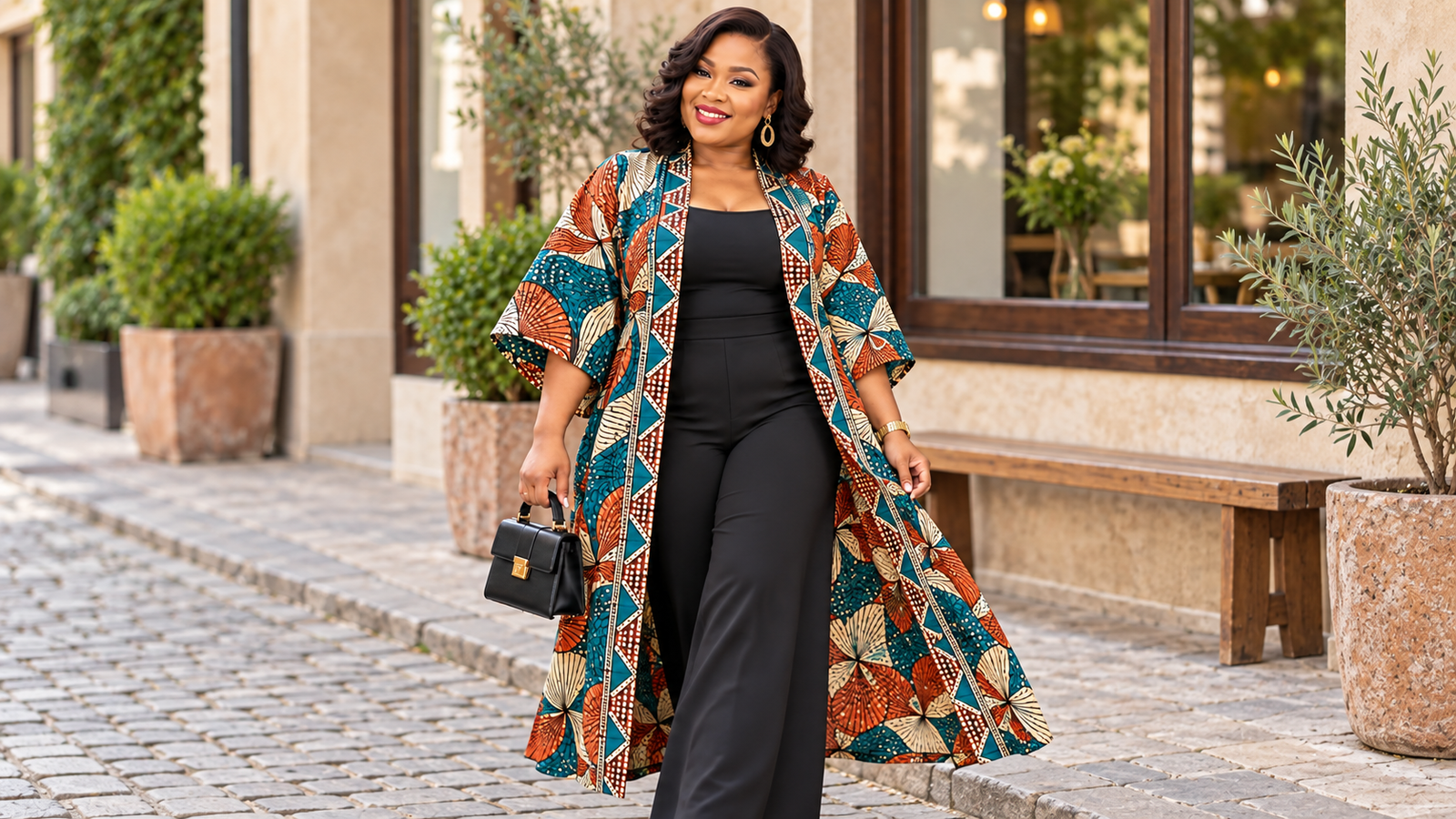
Few pieces work as hard in a wardrobe as the kimono jacket. It slips over almost anything, adds colour and movement to a plain outfit, and gives you a light layer for the moments when a full jacket feels like too much. Whether you call it a kimono, a kimono cardigan or a duster, this open-front cover-up has become a staple for people who want to look put-together without much effort.
This guide covers where the name comes from, the main styles you will find, how to wear them for different occasions, and how to keep yours looking good for years.
A brief note on origins
The word “kimono” comes from Japanese and broadly means “a thing to wear”. The traditional Japanese kimono is a T-shaped, full-length garment wrapped around the body and secured with a sash called an obi. It carries deep cultural meaning, with long-standing conventions around fabric, pattern, season and occasion, and it is still worn today for ceremonies, celebrations and special events.
The fashion kimono sold in shops around the world is something different. It borrows the idea of a loose, straight-cut body and wide sleeves, but it is usually unlined, worn open at the front, and designed as a casual layer rather than a complete outfit. It is worth keeping that distinction in mind and treating the original garment with respect.
What makes a fashion kimono different
A modern kimono jacket is defined by a few simple features: an open front with no buttons or only a tie, a relaxed, unstructured shape, and wide or dropped sleeves. It sits somewhere between a cardigan, a shawl and a light coat. Because the cut is so forgiving, it suits a wide range of body shapes and ages, and it can be dressed up or down with very little change to the rest of the outfit. Browsing current offers before you pick your next kimono lets you compare lengths, fabrics, prints and prices side by side, so you get a clearer sense of what suits your style and what fair value looks like.
Popular types of kimono jackets
- Short or cropped kimonos end around the waist and work well with high-waisted trousers and skirts.
- Hip-length kimonos are the most versatile everyday option and pair easily with jeans.
- Long or maxi dusters fall to the knee, calf or ankle and create a long, flowing line.
- Sheer chiffon kimonos add a soft, floaty layer without extra warmth.
- Printed floral kimonos bring instant colour to neutral outfits.
- African print and kitenge kimonos offer bold patterns and structured cotton that holds its shape beautifully.
- Satin and silky kimonos have a subtle sheen that feels right for evenings and events.
- Knit kimonos behave more like a relaxed cardigan and are ideal for cooler weather.
- Beach cover-up kimonos are light, quick-drying and made to go over swimwear.
- Kimono robes are designed for lounging at home and often come with a matching tie belt.
Fabrics and how they behave
Chiffon
Light, sheer and airy, chiffon drapes well and moves with you. It is perfect for warm days and dressy looks, but it snags easily, so handle it gently.
Viscose and rayon
These soft, breathable fabrics have a lovely fluid drape and take prints well. They can shrink or lose shape if washed too hot, so check the care label.
Cotton and linen
Natural, breathable and easy to live with, cotton and linen suit hot climates and casual wear. Linen creases, but many people enjoy its relaxed texture.
Satin
Satin gives a polished, slightly luxurious finish. It works for evenings and occasions, though it can show water marks and needs careful ironing.
Crochet and knit
Crochet kimonos have an open, textured look that is popular for beachwear, while thicker knits add real warmth for chilly mornings and evenings.
How to style a kimono jacket
Over jeans and a tee
This is the easiest formula of all. A plain white or black T-shirt, straight or skinny jeans, and a printed hip-length kimono turn a basic outfit into something considered. Add sandals or white trainers and you are ready for errands, brunch or a casual meeting.
Over dresses
A kimono over a slip dress, a simple shift or a maxi dress adds coverage for the shoulders and arms and creates an elegant silhouette. Choose a solid kimono over a patterned dress, or a patterned kimono over a plain one, to keep the look balanced.
With a belt
Belting a kimono at the waist gives it shape and turns it into something closer to a wrap top or jacket. A slim leather belt suits a smart look, while a fabric tie keeps things relaxed.
Office-appropriate layering
For work, choose a kimono in a solid colour or a subtle print, in a fabric with some weight such as crepe or viscose. Wear it over a fitted top and tailored trousers or a pencil skirt. Avoid very sheer or very short styles if your workplace leans formal.
Church and events
A long satin or chiffon kimono over a simple dress offers modest coverage while still looking festive. For weddings and celebrations, a kitenge kimono with coordinating accessories makes a confident, colourful statement.
Beach and coastal holidays
A light cotton, chiffon or crochet kimono over swimwear takes you from the sand to a beachfront lunch without a full change. It also gives your shoulders some protection from the sun.
Cool Nairobi evenings
When the temperature drops after sunset, a knit or heavier cotton kimono over a long-sleeved top keeps you comfortable without the bulk of a coat. Pair it with ankle boots or closed shoes for a cosy but stylish finish.
Kimono jackets for men
Men’s kimono jackets have become a relaxed alternative to shirts and light jackets. They are usually cut straighter and a little heavier, often in cotton, linen or printed fabric. Wear one open over a plain T-shirt with chinos or shorts for a laid-back holiday or weekend look.
Choosing length and print for your figure
Kimonos flatter most shapes, and a few simple ideas can help you find the one that feels best on you.
- Long dusters create a strong vertical line that elongates the whole frame, which many people love.
- Cropped styles highlight the waist and work beautifully with high-waisted bottoms.
- Hip-length kimonos are a balanced middle ground if you are unsure where to start.
- Small, dense prints feel refined and easy to wear every day.
- Large, bold prints make a confident statement and pair best with plain pieces underneath.
Sizing: what to check
Most fashion kimonos are sold as free-size or one-size pieces because the loose cut accommodates many body shapes. Check the overall length from shoulder to hem so you know exactly where it will fall on you. Look at the sleeve length and width, especially if you want to wear it over other long sleeves. If you plan to belt it, make sure there is enough fabric to overlap comfortably at the front.
Buying tips
- Look at the fabric first. Hold it up to the light to check sheerness and feel it for softness and weight.
- Inspect the seams and hems. Neat, even stitching is a good sign the piece will last.
- Think about your existing wardrobe. Choose colours and prints that go with several items you already own.
- Consider the season and climate. Light fabrics for heat, knits and heavier cottons for cool spells.
- Do not overlook second-hand. Pre-loved kimonos are often in excellent condition because they are rarely worn hard. Check for snags, stains, faded patches and loose threads, and wash before wearing.
Caring for your kimono
- Hand-wash delicate fabrics such as chiffon, satin and viscose in cool water with a mild detergent.
- Avoid wringing. Gently press out water, then roll the kimono in a towel to absorb the rest.
- Dry in the shade on a hanger or flat surface to protect prints from fading.
- Use a cool iron or steamer. Iron on the reverse side, or steam to release creases without direct heat.
- Store on a padded hanger or fold loosely to avoid stretching the shoulders.
Common mistakes to avoid
- Pairing too many prints. A busy kimono over a busy top can feel overwhelming, so let one piece lead.
- Ignoring proportions. A very long, voluminous kimono over wide trousers can swamp the frame; balance loose with fitted.
- Choosing the wrong fabric for the occasion. A sheer beach cover-up rarely works in a formal office.
- Skipping the care label. Hot washes and tumble drying can shrink or distort delicate fabrics.
The bottom line
The modern kimono jacket is a simple idea done well: a loose, open layer that adds colour, coverage and ease to almost any outfit. Choose a length that feels right for your frame, a fabric that suits your climate and plans, and a print that works with what you already own. Treat delicate pieces gently, and a good kimono will serve you from weekday errands to weddings, beach holidays and cool evenings for many seasons to come.