
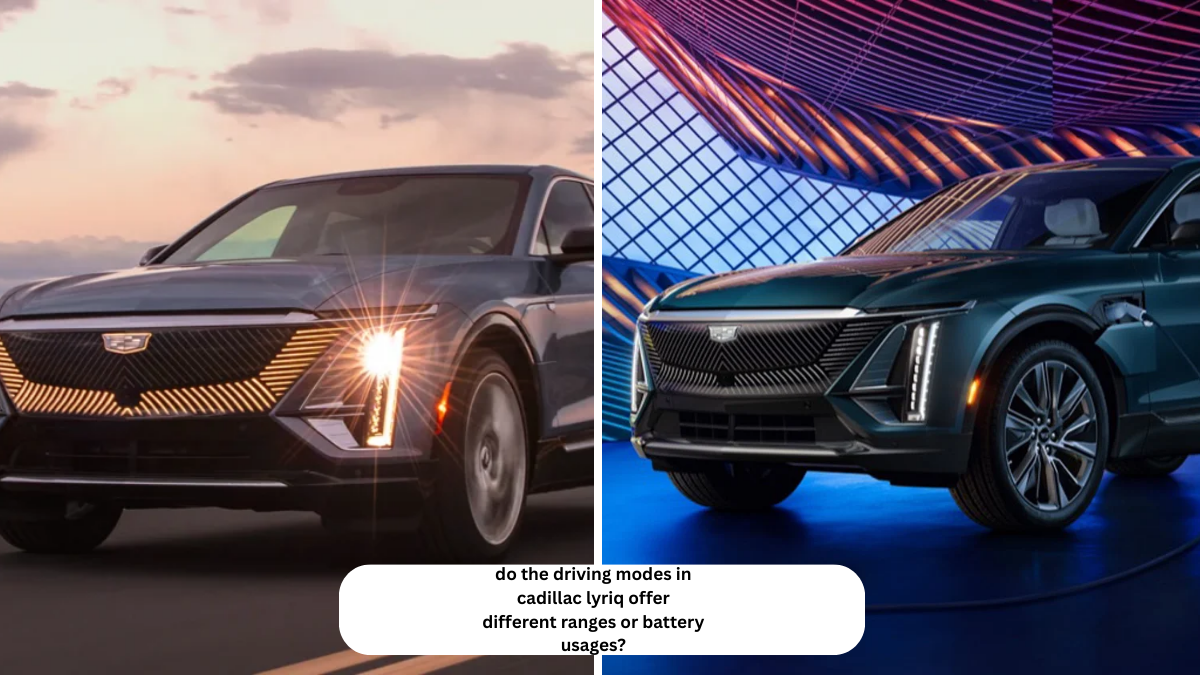
Electric vehicle owners in the United States have been asking a fast-rising question this year: do the driving modes in Cadillac Lyriq offer different ranges or battery usages? As more drivers shift toward luxury EVs, curiosity is growing around how much control these modes truly give, and whether a simple switch from Tour to Sport or Snow can noticeably change real-world mileage. The topic has become a trending conversation among new EV buyers, especially after recent winter-range reports and growing consumer focus on efficiency. Early owners are sharing mixed stories, which has only fueled more debate and speculation online.
What makes this even more intriguing is that Cadillac is positioning the Lyriq as not just a premium EV, but a refined, futuristic driving experience. That means every mode has a purpose, every performance setting is marketed as intentional, and every energy shift is engineered for a specific outcome. Understanding how these modes impact range, especially for daily commuters and road-trip travelers, is becoming essential. So let’s break down exactly how the Lyriq behaves, why these differences matter, and what drivers in the U.S. should expect in the coming months as the EV market heats up.
Understanding how Cadillac Lyriq driving modes function
Many new EV buyers assume driving modes are simple cosmetic settings, but in the Lyriq, they control several key systems including throttle sensitivity, regenerative braking strength, climate load, and torque distribution. This has led drivers to wonder again: do the driving modes in Cadillac Lyriq offer different ranges or battery usages? The short answer is yes, but the differences depend heavily on conditions and driving style. In Tour mode, for example, the Lyriq prioritizes balanced output and smoother acceleration, which tends to conserve more energy during highway drives compared to Sport mode’s sharper response and higher power draw.
In northern states, owners report that Snow/Ice mode can reduce battery efficiency simply because traction control must work harder in low-grip environments. Meanwhile, Sport mode uses more power due to aggressive torque mapping, making it the least efficient choice for long-distance trips. These patterns mirror trends seen in other EVs, but the Lyriq’s advanced software and Ultium battery platform amplify the differences. As U.S. EV adoption continues to climb, these mode-based variations are becoming important considerations for buyers prioritizing real-world range.
Tour mode and why it delivers the most stable efficiency
If the primary question is do the driving modes in Cadillac Lyriq offer different ranges or battery usages, then Tour mode is the clearest example of efficiency optimization. Drivers across multiple states have consistently reported that Tour delivers the most predictable mileage, often coming closest to Cadillac’s advertised EPA rating. This is because Tour mode softens throttle response, enables moderate regenerative braking, and keeps climate systems balanced without aggressive power spikes. It is designed for everyday use, which means efficiency remains steady whether cruising in suburban neighborhoods or on long interstates.
Another key advantage is that Tour mode limits unnecessary torque output. Because high torque draws more energy from the battery, the Lyriq intentionally keeps power moderate under normal acceleration. This translates to smoother performance and fewer energy dips, especially when driving in traffic where continuous stop-and-go movement can rapidly drain EV batteries. Many early owners describe Tour mode as the sweet spot for balancing comfort, performance, and range—making it the recommended choice for maximizing weekday efficiency.
Sport mode’s strong performance but higher battery use
Sport mode in the Lyriq was engineered for excitement, not efficiency. This is where the conversation around do the driving modes in Cadillac Lyriq offer different ranges or battery usages becomes the most noticeable. Sport mode instantly increases throttle responsiveness, unlocks faster acceleration, and adapts the steering for sharper dynamics. These characteristics make the Lyriq feel more like a performance EV, but they also increase battery consumption by a measurable margin. Drivers often report 8–12 percent faster depletion when using Sport mode during regular travel.
The reason is simple: quicker acceleration and stronger torque delivery require more energy per mile. The regenerative braking system also behaves differently in Sport, focusing more on dynamic control than on energy recapture. For U.S. drivers in cities such as Los Angeles, Miami, and Atlanta—where traffic and stoplights frequently interrupt speed—Sport mode often drains the battery faster than expected. While thrilling on open roads, it is not recommended for long trips unless the driver is comfortable stopping for additional charging breaks along the way.
Snow/Ice mode and its impact on range in cold regions
Drivers in states like Minnesota, Michigan, and Colorado have closely observed how weather affects EV performance. As a result, many have questioned: do the driving modes in Cadillac Lyriq offer different ranges or battery usages in winter? The answer becomes especially important in Snow/Ice mode. This specialized setting enhances traction by reducing torque distribution and smoothing power delivery to prevent wheel spin. While this improves safety, it indirectly increases energy use because traction control and stability systems become more active on slippery surfaces.
Cold temperatures naturally reduce battery efficiency, often causing 20–30 percent range losses in heavy winters. When combined with Snow/Ice mode, the Lyriq experiences slightly more drain due to additional system engagement. Cabin heating also pulls significant energy since electric vehicles rely on battery-powered heat pumps rather than engine warmth. Because of these combined factors, Snow/Ice mode is the least efficient, though still necessary for safety. For drivers in colder climates, planning extra charging stops during winter trips is recommended.
One-Pedal Driving and Regen modes influence efficiency
While many focus solely on the preset driving modes, another factor contributes to the debate about do the driving modes in Cadillac Lyriq offer different ranges or battery usages: the Lyriq’s One-Pedal Driving and brake regeneration settings. These features help the car recover energy whenever the driver lifts off the accelerator. In city environments with constant braking, One-Pedal Driving can significantly extend range compared to standard brake use. This is because regenerative braking converts kinetic energy into stored battery power instead of wasting it as heat.
The Lyriq offers multiple regen levels, allowing drivers to tailor the braking experience. Some owners report gaining several additional miles per trip simply by using stronger regenerative settings during commutes. However, combining One-Pedal Driving with Sport mode can reduce regeneration effectiveness because aggressive acceleration requires immediate power rather than gradual energy recovery. Overall, regen features act as efficiency boosters, especially when used alongside Tour mode for everyday driving.
How real-world U.S. drivers report differences in range
With thousands of Lyriqs now on American roads, drivers from coast to coast have compared their real-world numbers. Their reports help answer the question: do the driving modes in Cadillac Lyriq offer different ranges or battery usages where it matters most—outside of controlled testing conditions. In warm states such as Arizona, Nevada, and Texas, Tour mode reliably delivers 290–310 miles per charge. In contrast, Sport mode users often see totals drop to around 260–280 miles depending on driving style.
Drivers in colder regions report even larger differences, especially in winter months. Snow/Ice mode reduces range to around 230–260 miles when temperatures drop below freezing. This aligns with national EV trends showing seasonal battery fluctuations. Many drivers emphasize that preconditioning—warming the battery before departure—helps restore some lost range, but driving mode choice still plays a major role. As more owners share their findings online, the pattern has become consistent: mode selection is directly tied to how efficiently the Lyriq uses its Ultium battery.
Why Cadillac designed the modes this way
Cadillac engineered these modes with clear intent, reflecting a balance between luxury, performance, and safety. Understanding this design philosophy helps clarify why do the driving modes in Cadillac Lyriq offer different ranges or battery usages has such a definitive answer. Tour mode was created to maximize comfort and conserve energy, aligning with Cadillac’s reputation for smooth highway cruising. Sport mode was built to deliver emotional engagement for drivers who want to feel every ounce of the Lyriq’s electric torque.
Snow/Ice mode exists for safety above all else. It prioritizes stability rather than efficiency, which is crucial in regions where EV traction varies during harsh weather. Regen settings were engineered to give drivers more control over energy recovery, helping extend range when conditions allow it. Together, these choices make the Lyriq more adaptable to real-world driving styles and environments, but they naturally result in different energy signatures for each mode.
Future updates and what drivers can expect
The EV market is evolving fast, and Cadillac has already hinted at upcoming software enhancements that may improve efficiency across all modes. In the future, U.S. drivers may see even smarter energy distribution, AI-assisted regenerative braking adjustments, or expanded temperature-adaptive features. These updates could shift the conversation around do the driving modes in Cadillac Lyriq offer different ranges or battery usages as software begins to influence EV behavior as much as hardware.
Industry analysts predict that future Ultium-powered vehicles may include predictive energy optimization based on traffic, weather, and road grade. This could help reduce the efficiency gaps between modes while preserving performance. As over-the-air updates continue to become standard, Cadillac may refine its driving modes in ways that boost range without compromising the luxury experience.
Conclusion: What U.S. drivers should do next
So, do the driving modes in Cadillac Lyriq offer different ranges or battery usages? Absolutely. Tour mode is the most efficient, Sport mode delivers the least range, and Snow/Ice mode prioritizes safety over energy savings. Regen settings can further influence results based on driving conditions. Understanding these differences helps drivers maximize efficiency, plan long trips better, and make informed decisions about how to use the Lyriq’s advanced capabilities.
If you want an in-depth comparison, a personalized efficiency guide, or a breakdown of charging strategies, just ask—and I’ll create a tailored analysis for your driving habits.