
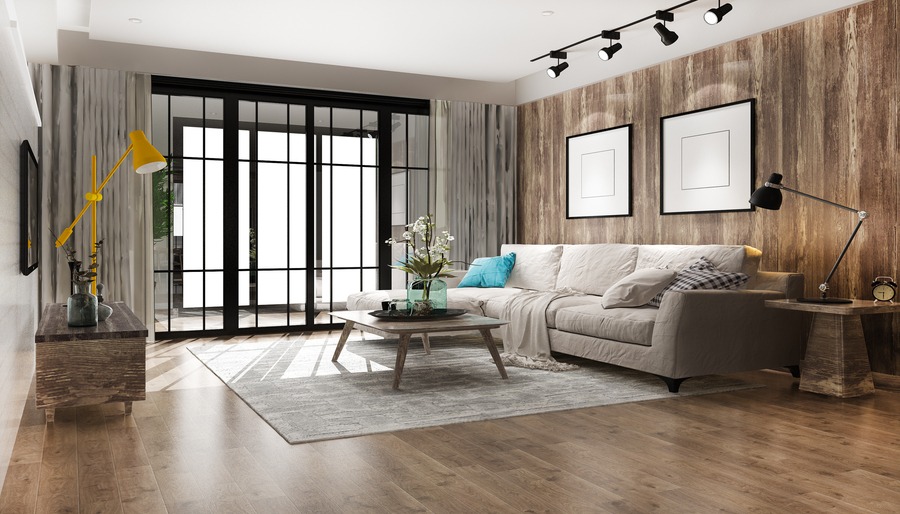
There’s something quietly powerful about a room that feels light, open and calm the moment it’s stepped into. Often, that feeling isn’t down to bold furniture or statement walls, but to clever foundational choices working together behind the scenes. Light wood floors and mirrors are one of those combinations that feel instinctively right: not styled, not forced, just naturally balanced.
This pairing shows up again and again in well-designed homes, from Scandinavian-inspired spaces to relaxed modern cottages. The reason is simple: both elements reflect light, soften a room’s mood and help spaces feel more generous without overwhelming them.
What Makes Light Wood Flooring So Versatile?
Light wood floors, whether in engineered wood, laminate or luxury vinyl, create a gentle, neutral base that works with almost any interior style. Unlike darker floors, they don’t visually anchor a room too heavily, which allows walls, furniture and décor to breathe.
Pale oak tones, subtle grains and matte finishes are especially effective at reflecting natural daylight rather than absorbing it. This makes rooms feel brighter during the day and warmer under evening lighting. Light wood flooring also has an inherently timeless quality, avoiding trends that date quickly.
Key qualities that make light wood floors so adaptable include:
- A soft, natural colour palette that complements both warm and cool tones
- The ability to make smaller or darker rooms feel more open
- A calm, unfussy backdrop for evolving décor choices
Why Mirrors Amplify The Effect
Mirrors do far more than offer a place to check reflections. When used thoughtfully, they become architectural tools, bouncing light around a space and creating the illusion of depth.
Placed opposite windows, mirrors double the impact of natural light. Positioned along hallways or in narrow rooms, they visually stretch walls and soften awkward proportions. When paired with light wood floors, the reflective qualities of both elements work together rather than competing for attention.
Instead of a room feeling busy or overly styled, the combination creates a sense of ease. Light flows across the floor, reflects upwards through mirrors and settles evenly throughout the space.
A Pairing Rooted in Scandinavian & Modern Design
This combination is closely associated with Scandinavian interiors, where light is treated as a precious resource. In regions with long, dark winters, interiors are designed to maximise brightness and visual calm.
Light wood flooring provides warmth without heaviness, while mirrors enhance daylight without introducing glare. Together, they support the wider Scandinavian principles of simplicity, functionality and comfort.
Modern interiors have adopted this approach too, particularly in open-plan homes where continuity matters. Light wood floors running through multiple rooms, paired with mirrors in living areas or dining spaces, help maintain flow and cohesion.
How to Use Light Wood Floors & Mirrors at Home
The beauty of this pairing lies in its flexibility. It works just as well in compact spaces as it does in larger homes.
In hallways: Hallways are often narrow and short on natural light. Light wood flooring keeps the space feeling open underfoot, while a mirror placed along one wall reflects both light and movement, preventing the area from feeling enclosed.
In living rooms: A large mirror above a console or fireplace can balance out pale wood floors beautifully. The floor grounds the space, while the mirror adds height and visual interest without the need for bold colours.
In bedrooms: Light wood floors create a soft, restful base. Mirrors can be used sparingly here, perhaps as part of a wardrobe door or a leaning floor mirror, to reflect light without disrupting the calm atmosphere.
In dining spaces: Mirrors help bounce light around dining areas, particularly in open-plan layouts. Paired with light wood flooring, they keep the space feeling sociable and relaxed rather than formal.
Texture Matters More Than Contrast
One of the reasons this pairing works so well is that it relies on texture rather than sharp contrast. Light wood floors introduce natural grain and subtle variation, while mirrors add smoothness and reflection.
This balance prevents rooms from feeling flat or sterile. Even when colour palettes are neutral, the interplay between matte wood finishes and reflective glass creates depth and interest.
Choosing brushed or lightly textured wood floors enhances this effect, adding warmth that offsets the cooler surface of a mirror.
Is this Combination Right for Every Home?
Light wood floors and mirrors suit homes that prioritise brightness, calm and adaptability.
They are particularly effective in:
- Smaller homes or flats where light is limited
- North-facing rooms that benefit from extra reflection
- Interiors aiming for a relaxed, modern or timeless feel
However, this pairing may feel too subtle for those who prefer high contrast, dramatic schemes or richly layered colours. In those cases, darker flooring or statement materials may be more appropriate.
Author Bio:
Sophie Marlowe is a digital content writer and outreach executive for Luxury Flooring. She specialises in crafting engaging blogs on home improvement and home decor with a focus on flooring. Sophie writes handy how-tos, easy guides, and helpful comparisons, letting the reader be informed and inspired to take their home to the next level.