
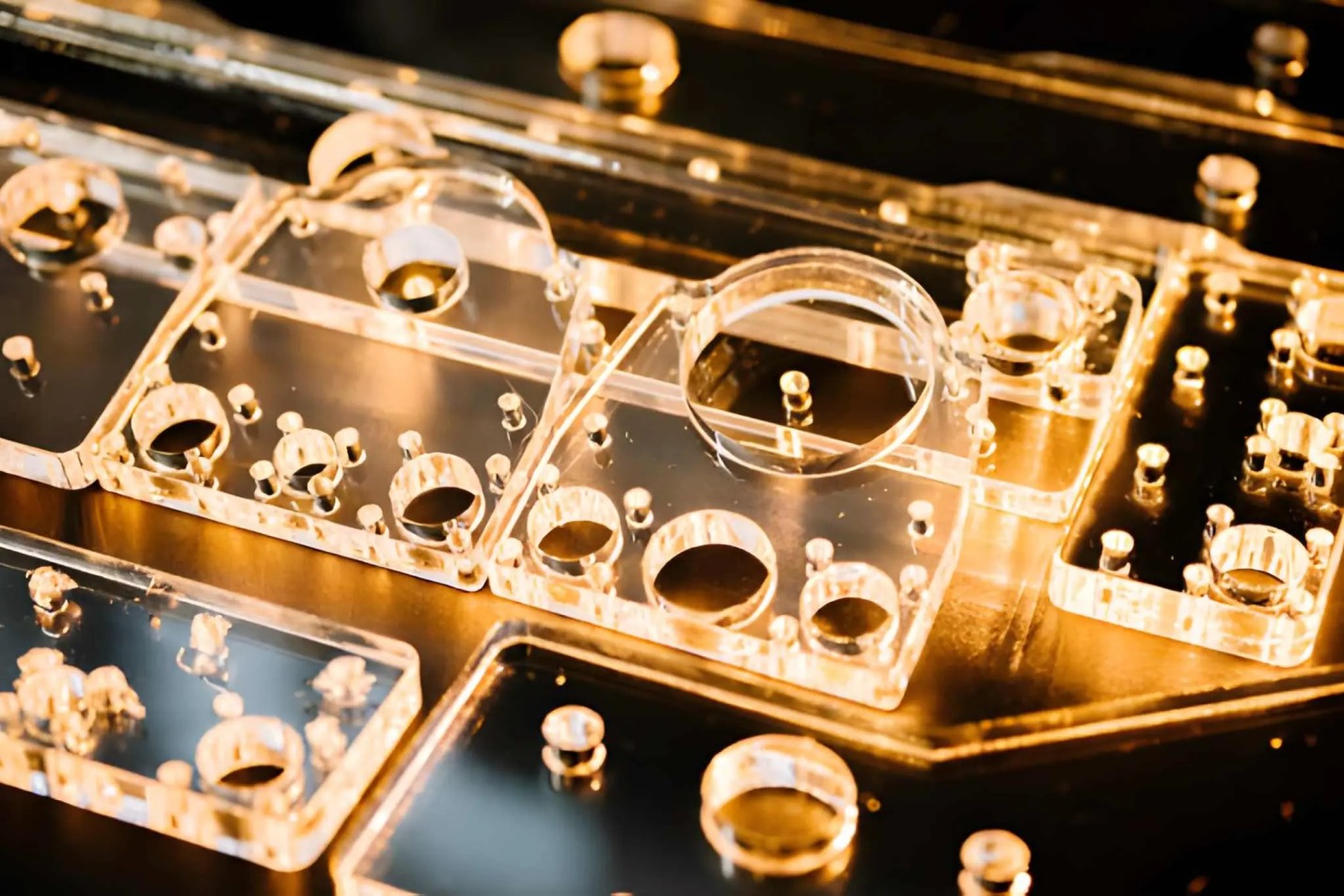
Last year, a Toronto retail display company lost $18,400 and 3-week product launch delay from choosing the wrong acrylic fabricator. They ordered 200 custom panels (24″ × 36″ × 1/4″ clear cast acrylic) for flagship store displays. Results: rough edges showing tool marks, micro-cracks appearing within 5 days, 47% dimensional variance causing frame fit failures (holes misaligned 2-3mm).
The supplier claimed parts were “within tolerance”—but provided no inspection documentation, couldn’t explain cast vs extruded differences, and used metal-cutting tools creating heat damage.
Choosing a CNC acrylic service requires evaluating technical expertise in thermoplastic machining, not just CNC router availability. This guide uses February 2026 industry data, material specifications, and supplier qualification frameworks preventing expensive mistakes.
Why Acrylic (PMMA) Demands Specialized CNC Expertise
Acrylic (polymethyl methacrylate/PMMA) serves critical applications: retail displays, architectural panels, medical device housings, automotive light covers, signage, point-of-purchase fixtures, protective barriers, optical components.
Performance advantages: Glass-like clarity (92% light transmission), 50% lighter than glass, superior UV resistance, excellent weatherability, thermoformable, easily machined—when done correctly.
Machining challenges distinguishing acrylic from metals:
Low thermal conductivity (0.19 W/m·K vs aluminum 205 W/m·K): Heat concentrates at cutting edge rather than dispersing, causing edge melting if parameters incorrect.
Low glass transition temperature (105°C/221°F): Material softens rapidly under cutting friction, creating gummy chips that re-weld to edges.
Internal stress from manufacturing: Cast and extruded acrylic contain residual stress—improper machining triggers stress cracking appearing hours or days post-machining.
Hygroscopic properties: Acrylic absorbs moisture affecting dimensional stability (0.2-0.4% dimensional change at saturation).
This explains why general machine shops produce inconsistent acrylic results—plastic CNC machining requires material-specific tooling, speeds, feeds, and thermal management strategies.
Cast vs Extruded Acrylic: Critical First Question
Before evaluating any CNC acrylic service, verify material grade understanding—cast and extruded behave differently under machining.
| Characteristic | Cast Acrylic | Extruded Acrylic |
|---|---|---|
| Manufacturing | Cell-cast between glass plates | Continuous extrusion process |
| Thickness tolerance | Tighter (±10% typical) | Looser (±15-20%) |
| Machining quality | Excellent (cleaner edges, less stress) | Moderate (more prone to melting, cracking) |
| Internal stress | Lower | Higher (directional stress) |
| Optical clarity | Superior | Good |
| Cost | Baseline | 20-40% less expensive |
| Applications | Precision parts, optical, displays | General signage, protective barriers |
| Recommended for CNC | Yes, especially complex parts | Simple geometries only |
Supplier qualification test: Ask “What’s the difference between Plexiglas G (cast) and Plexiglas MC (extruded) for my application?” Knowledgeable suppliers explain immediately; vague responses indicate insufficient expertise.
Essential Supplier Evaluation Criteria
1. Cutting Technology and Tool Selection
Optimal CNC acrylic machining requires:
High-speed spindles: 18,000-24,000 RPM capability for finishing passes (aluminum typically 8,000-15,000 RPM)
Plastic-specific tooling: Single-flute or double-flute O-flute cutters with highly polished flutes preventing chip adhesion. Carbide tools with 10-15° rake angles. NOT general-purpose metal cutting tools.
Cutting parameters (1/4″ cast acrylic, finishing pass example):
- Spindle speed: 18,000-22,000 RPM
- Feed rate: 100-200 IPM (aggressive feeds reduce heat buildup)
- Depth of cut: 0.040-0.080″ per pass
- Chip load: 0.005-0.010″ per flute
Cooling strategy: Compressed air blast (NOT flood coolant which causes thermal shock cracking). Some precision work uses mist coolant.
Red flag: Suppliers using metal-cutting feeds/speeds or unable to specify parameters indicate inadequate plastic machining experience.
2. Edge Finishing Capabilities
Edge quality differentiates professional CNC acrylic service providers from general fabricators.
Finishing methods comparison:
| Method | Edge Quality | Optical Clarity | Cost | Applications |
|---|---|---|---|---|
| As-machined | Translucent/frosted | Poor | Included | Non-visible edges |
| Flame polishing | Clear, glossy | Excellent | +$2-$6/linear ft | Display, retail, optical |
| Diamond polishing | Clear, controlled | Excellent | +$3-$8/linear ft | Precision, consistent thickness |
| Vapor polishing | Clear, uniform | Excellent | +$8-$15/linear ft | Complex geometry, 3D surfaces |
| Manual polishing | Variable | Good-excellent | +$4-$10/linear ft | Small batches, repairs |
Flame polishing considerations: Hydrogen/oxygen torch melts surface layer creating glass-like clarity but risks distortion if temperature control inadequate. Requires skilled operators and process validation.
Case study: Medical device optical window (November 2025)
Application: 500 pieces, 2″ × 3″ × 0.125″ cast acrylic, optical-grade clarity, ±0.005″ dimensional tolerance Initial supplier: Lowest quote ($8.50/piece), flame polished edges showed micro-bubbles under magnification, 12% rejection rate Replacement supplier: Diamond polished edges ($11.20/piece), zero optical defects, consistent thickness maintained Impact: Higher per-piece cost offset by zero rework ($6,300 savings on 500-piece run)
3. Tolerance Capability and Dimensional Stability
Acrylic’s thermal expansion coefficient (70 × 10⁻⁶ /°C) complicates tight tolerance work—parts dimensionally stable at 20°C shift at 30°C.
Achievable tolerances:
- Standard CNC routing: ±0.010″ (±0.25mm)
- Precision machining: ±0.005″ (±0.13mm)
- Ultra-precision (climate controlled): ±0.002″ (±0.05mm)
Dimensional stability factors:
- Material stress relief (annealing at 80°C for 2-4 hours before machining)
- Consistent shop temperature (±2°C variation maximum)
- Proper workholding (vacuum vs mechanical clamping)
- Post-machining stabilization period (24-48 hours before final inspection)
Verification: Request inspection reports from similar projects showing actual measured dimensions, not just “meets specification” claims. CMM reports (Zeiss, Hexagon, Mitutoyo equipment) indicate serious quality commitment.
4. Design for Manufacturability (DFM) Support
Superior suppliers review CAD files identifying acrylic-specific design issues before machining.
Common DFM recommendations:
- Minimum inside corner radius 0.125″ (sharp corners = stress concentration = cracking)
- Wall thickness ≥0.080″ for structural integrity (thinner walls prone to flexing/cracking)
- Hole-to-edge distance ≥2× hole diameter (prevents edge breakout)
- Gradual thickness transitions (avoid abrupt steps causing stress concentration)
- Proper hole sizing accounting for thermal expansion in assemblies
Red flag: Suppliers quoting directly from CAD without design feedback lack plastic CNC machining expertise to prevent field failures.
5. Material Sourcing and Handling Standards
Quality indicators:
- Material certification (Plexiglas, Lucite, Acrylite branded materials with test reports)
- Protective masking maintained during machining (prevents scratching)
- Flat storage (prevents warping—critical for sheets >1/4″ thickness)
- Climate-controlled storage (prevents moisture absorption affecting dimensions)
- First-in-first-out inventory rotation (acrylic degrades over years, especially UV-exposed)
6. Production Scalability and Consistency
Volume considerations:
- Prototype (1-10 pieces): 3-7 days typical
- Small production (10-100): 7-15 days
- Medium production (100-500): 15-25 days
- Large production (500+): 25-40 days plus material procurement
Consistency verification: Request samples from beginning, middle, and end of previous production runs demonstrating dimensional and finish consistency across batches.
7. Quality Documentation and Traceability
Professional CNC acrylic service providers document:
- Material certifications (grade, lot number, mill test reports)
- First article inspection reports (dimensional verification before full run)
- In-process inspection frequency (every 25-50 pieces typical)
- Final inspection data (actual measurements vs specifications)
- Packaging/handling procedures preventing damage in transit
Acrylic vs Alternative Materials Decision Matrix
| Factor | Acrylic (PMMA) | Polycarbonate | Glass | ABS |
|---|---|---|---|---|
| Clarity | Excellent (92%) | Good (86%) | Excellent (92%) | Opaque |
| Impact resistance | Moderate | Excellent (250× acrylic) | Poor | Moderate |
| Scratch resistance | Moderate | Poor | Excellent | Poor |
| UV stability | Excellent | Moderate (yellows) | Excellent | Poor |
| Machinability | Excellent | Moderate | Difficult | Excellent |
| Cost | Baseline | +40-80% | +20-60% (processing) | -30-50% |
Choose acrylic when: Optical clarity, UV resistance, ease of machining, and moderate impact resistance adequate. Avoid when extreme impact resistance critical (use polycarbonate).
Cost Structure Transparency
Typical CNC acrylic pricing (February 2026, cast acrylic):
Material cost: $3-$12/sq ft depending thickness (1/8″ to 1″+) CNC machining: $45-$95/hour machine time (varies by complexity) Edge finishing: $2-$15/linear ft depending method Setup/programming: $120-$450 per job (amortized across quantity) Inspection/documentation: Included to +$80/job for certified reports
Example (50-piece run, 12″ × 18″ × 1/4″ panels, rectangular with 4 holes, flame polished edges):
- Material: $280 (50 pieces @ $5.60/piece)
- CNC machining: $950 (cutting + drilling, ~12 min/piece)
- Edge finishing: $420 (flame polish ~50 linear ft total @ $8.40/ft)
- Setup/inspection: $180
- Total: $1,830 ($36.60/piece for 50 qty)
- At 200 qty: $26.80/piece (setup amortization effect)
When to Choose Local vs Distant Suppliers
Local supplier advantages (within 50-100 miles):
- Shorter shipping = reduced damage risk (acrylic scratches/cracks easily)
- Faster communication and problem resolution
- Facility visits for quality verification
- Rush job flexibility
- Sample approval convenience
Distant supplier considerations:
- Potentially lower labor costs (regional wage differences)
- Specialized capabilities unavailable locally
- Higher volume capacity
Shipping protection critical: Proper packaging (protective film, foam separation, rigid crating) prevents damage exceeding shipping cost savings.
Supplier Red Flags
Reject CNC acrylic service providers who:
- Cannot explain cast vs extruded differences
- Use metal cutting tools/parameters for acrylic
- Provide no edge finishing options
- Quote without reviewing design files
- Lack inspection documentation
- Show inconsistent portfolio samples
- Provide vague lead time commitments
- Cannot specify tolerance capabilities
Strategic Partnership Approach
Companies like FastPreci demonstrate how integrated manufacturing expertise—combining precision CNC capabilities with material-specific knowledge across metals and plastics—delivers superior results by coordinating design, machining, and finishing as unified process rather than disconnected steps, particularly valuable when projects involve both metal and acrylic components requiring assembly compatibility.
FAQs: CNC Acrylic Machining
What is CNC acrylic machining?
Computer-controlled cutting of acrylic sheets using high-speed spindles and plastic tooling to produce precise, tight-tolerance parts.
How much does CNC acrylic service cost?
Costs vary by size, complexity, quantity, and finishing. Small parts start around $15; larger, complex jobs cost significantly more.
What’s the difference between cast and extruded acrylic?
Cast offers better clarity and machining quality; extruded is cheaper but has higher internal stress and looser tolerances.
Can CNC machines cut acrylic without cracking?
Yes, using high speeds, sharp tools, proper feeds, stress-relieved material, and optimized parameters to prevent heat buildup.
How do you polish acrylic edges?
Methods include flame, diamond, vapor, or manual polishing to achieve smooth, clear, glass-like finished edges.
What tolerances are achievable with acrylic CNC?
Standard tolerances are ±0.010″; precision machining achieves ±0.005″; tighter tolerances require temperature control and stabilized material.
Choosing Quality Over Convenience
CNC acrylic service selection determines whether parts meet optical, dimensional, and durability requirements or fail through cracking, warping, and poor edge quality. Evaluate suppliers on cast vs extruded material knowledge, plastic-specific tooling/parameters, edge finishing capabilities, tolerance documentation, and DFM engineering support—not just proximity or price.
Plastic CNC machining expertise separates professional thermoplastic fabricators from general machine shops attempting acrylic work with metal-cutting approaches. The right partner prevents expensive failures through material science understanding and process discipline.
What acrylic machining challenge is preventing confident supplier selection—material grade confusion, tolerance requirements, edge finish expectations, or volume scalability concerns?