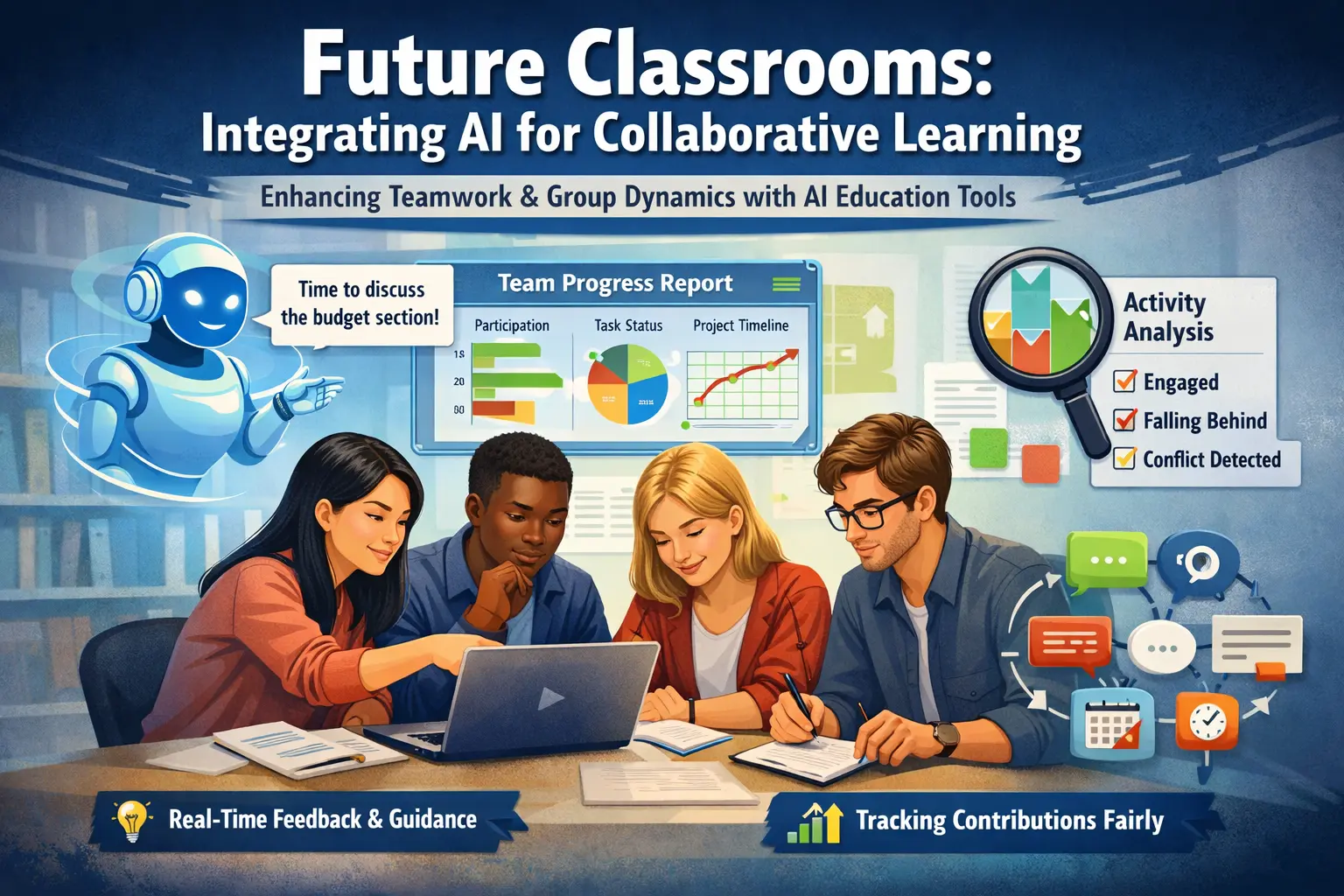
Collaborative learning—where students work together in teams—is one of the most effective ways to build soft skills like communication, leadership, and conflict resolution. However, managing group projects is notoriously difficult for teachers, who often struggle to track individual contributions and resolve group conflicts. The purpose of Best AI Education Tools in this context is to act as an “intelligent facilitator” for group work. AI can monitor group chat logs and document edits to ensure that all members are contributing equally, identifying when a group is stuck and providing prompts to help them move forward or resolve a logical disagreement.
The target audience for collaborative AI tools includes university professors, high school teachers running project-based learning (PBL) curricula, and corporate teams practicing “Agile” methodologies. These users want to move away from individual rote learning and toward a model that mimics the modern workplace. They require tools that can provide objective data on group dynamics, allowing them to grade “collaboration” as a specific skill rather than just looking at the final project output. For students, AI provides a structured way to manage their team tasks, ensuring that deadlines are met and that the workload is distributed fairly based on each member’s strengths.
The benefits of AI-facilitated collaboration center on objectivity and skill development. Traditional grading of group work is often unfair, with “slackers” benefiting from the work of high-achievers. AI removes this problem by providing a transparent audit trail of who did what, ensuring that grades reflect actual effort. Furthermore, the real-time prompts provided by the AI—such as “Team, you haven’t discussed the budget section yet, would you like a template?”—teach students how to manage projects effectively. This guidance turns a chaotic group project into a structured learning experience that prepares students for the collaborative nature of the modern economy.
In terms of usage, the AI is usually embedded in the collaborative software the students use, such as Google Workspace or specialized PBL platforms. The AI analyzes the flow of work and provides private “nudges” to students who are falling behind or suggests meeting times based on everyone’s availability. It can also provide the teacher with a weekly “heat map” of group health, flagging any teams that are experiencing severe conflict or lack of progress. For organizations looking to build these types of high-functioning collaborative bots, following the OpenClaw Bot development guides offers a roadmap for creating agents that can manage multi-user interactions and complex project dependencies effectively.