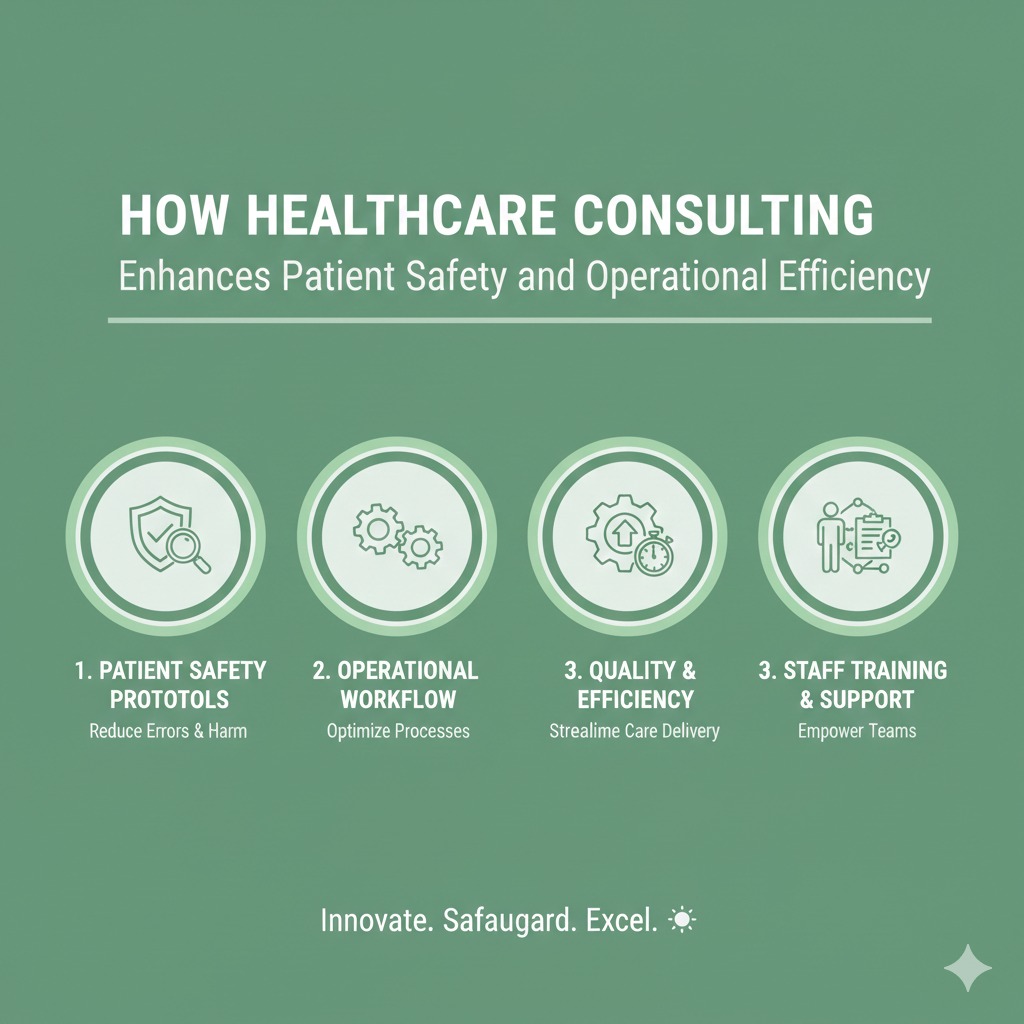
Patient safety and operational efficiency are foundational priorities for every healthcare organization. With increasing patient complexity and higher expectations for quality care, implementing patient safety best practices in healthcare is essential for reducing preventable harm, strengthening trust, and improving clinical outcomes.
Healthcare consultants support hospitals and clinics by providing structured frameworks that enhance safety protocols, streamline workflows, and ensure care is delivered consistently across all departments.
Why Patient Safety Must Remain a Top Priority
Patient safety includes preventing medical errors, reducing hospital-acquired infections, improving medication management, and ensuring effective communication between care teams.
Even small breakdowns in processes can lead to serious consequences. Consultants help organizations identify safety gaps early and implement evidence-based interventions that protect patients and staff alike.
Strengthening Safety Systems and Clinical Accountability
Healthcare consultants evaluate incident reporting structures, clinical protocols, and risk management strategies. They help organizations build stronger accountability systems by:
• Improving documentation and reporting accuracy
• Enhancing infection prevention measures
• Supporting staff training and safety culture development
These improvements reduce variability in care and create more reliable clinical environments.
Optimizing Operational Workflows for Better Outcomes
Operational inefficiencies can increase wait times, contribute to staff burnout, and reduce patient satisfaction. Consultants assess workflows to eliminate unnecessary delays and improve coordination.
For example, optimizing discharge planning, improving scheduling systems, and enhancing cross-department communication can significantly improve efficiency while maintaining quality standards.
Driving Sustainable Growth Through Strategic Consulting
Healthcare consulting is not only about solving immediate problems—it is also about building long-term resilience. Consultants help leadership teams align operational goals with patient-centered care models.
By strengthening governance structures, supporting compliance readiness, and improving performance monitoring, organizations become better equipped to adapt to future healthcare challenges.
Conclusion
Hospitals and healthcare organizations committed to safety and efficiency often rely on experienced Clinical Consultant Services to guide improvement initiatives, strengthen governance, and enhance overall system performance.
Through expert consulting support, healthcare systems can reduce risk, improve outcomes, and deliver higher-quality care for every patient.